

How to Measure for Outdoor Blinds: The Melbourne Homeowner’s Guide
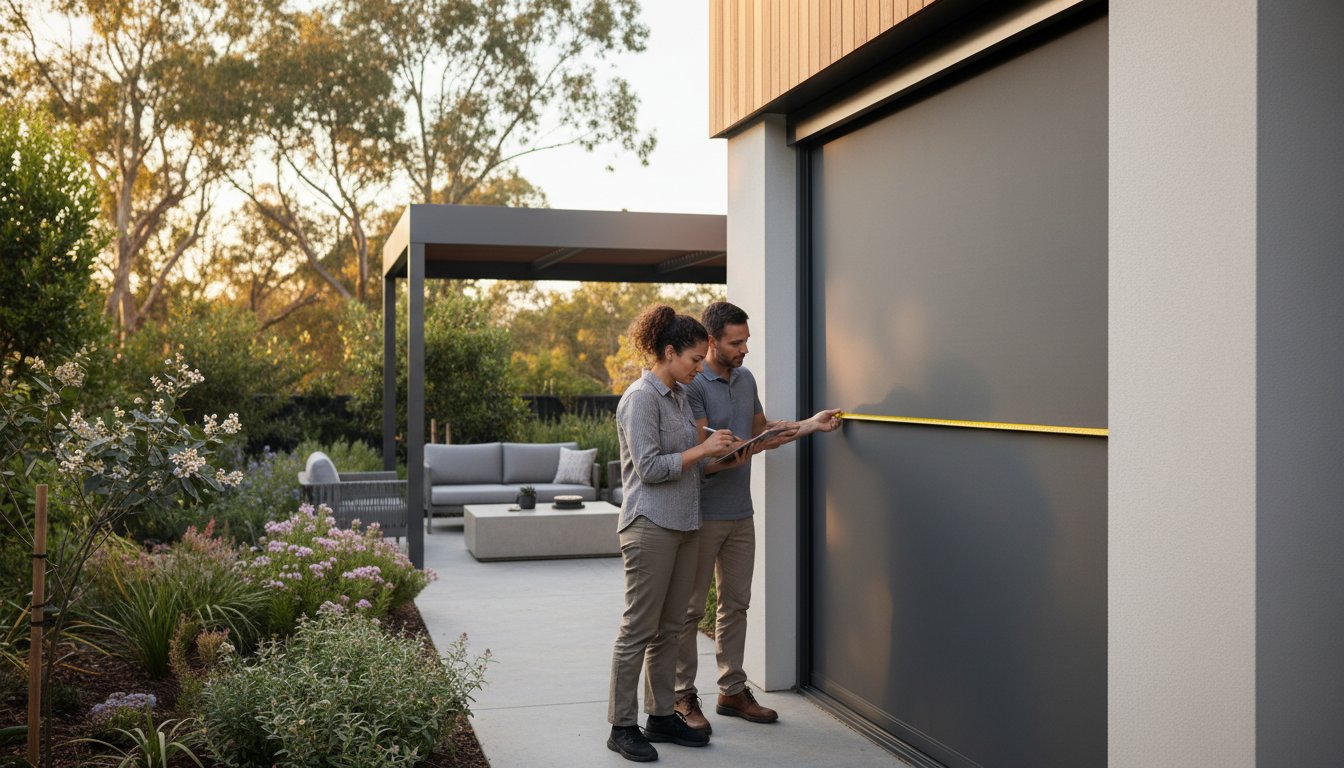
Imagine spending weeks planning your outdoor upgrade only to have the final result ruined by a 15mm gap because a post was slightly out of level. It’s a common fear for Melbourne homeowners, especially when learning how to measure for outdoor blinds for the first time. You want the best protection for your patio, but the pressure of getting the numbers right can feel overwhelming when custom-made products are involved.
We agree that nobody should risk their hard-earned money on a "near enough" fit. You deserve a seamless experience and the best results straight from the manufacturer to you. This guide will show you the exact steps to take so you can provide the right details for an accurate quote. We'll explain the difference between face and reveal fits, how to handle wonky posts, and why our professional check-measure is the ultimate safety net for your home. You'll gain the confidence to start your project and secure your FREE quotation with total peace of mind.
Key Takeaways
- Understand the crucial difference between Reveal and Face fits to choose the most effective mounting style for your outdoor structure.
- Master the essential 3-point measurement technique to learn how to measure for outdoor blinds with professional-grade accuracy.
- Identify and avoid common DIY pitfalls, such as assuming your posts are perfectly straight or overlooking hidden obstructions like door handles.
- Discover how to use your rough dimensions for a fast price estimate and how to secure a FREE professional check-measure for a guaranteed fit.
Understanding the Basics: Reveal Fit vs. Face Fit
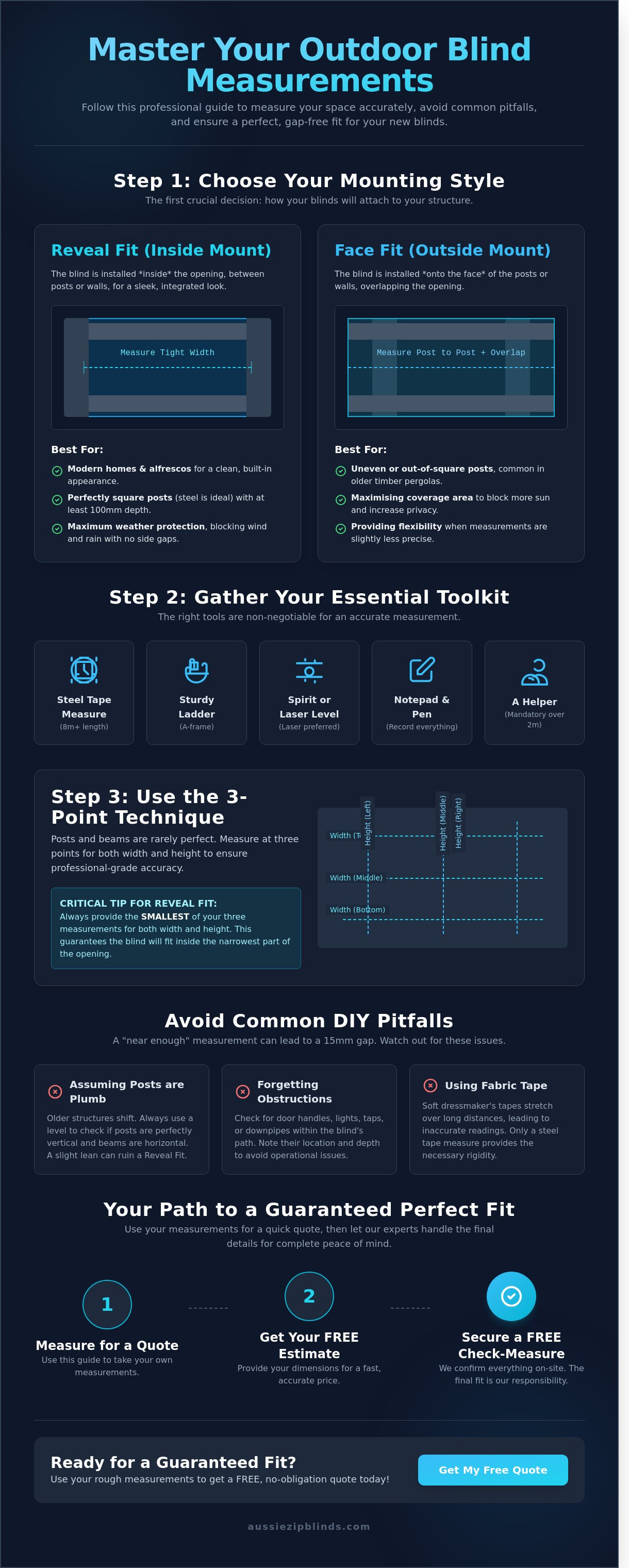
You need a perfect fit to get the best protection for your outdoor space. It's the difference between a professional finish and a messy DIY job. Before you learn how to measure for outdoor blinds, you must decide between a Reveal Fit and a Face Fit. These two methods dictate exactly where you place your tape measure and how the final product performs against Melbourne's unpredictable weather.
A Reveal Fit means mounting the blind inside the opening, tucked neatly between your posts or walls. This creates a sleek, integrated appearance. It's the most popular choice for modern homes across the South Eastern Suburbs of Melbourne. A Face Fit involves mounting the blind onto the front of the structure. The blind sits on the "face" of the posts rather than inside the gap. Your choice depends heavily on the material of your patio. Steel beams offer the precision needed for internal mounts, while older timber structures often require the flexibility of a face mount. Understanding these types of window coverings ensures you select a style that matches your home's architecture.
The fit type changes your measurement points entirely. For a Reveal Fit, you measure the tight internal width. For a Face Fit, you measure the outside of the posts and add extra width for overlap. Precision is key. Don't guess. We've sold over 150,000 blinds because we focus on these exact details. Getting this right ensures your 100% Australian made blinds look fantastic and work perfectly for years.
When to Choose a Reveal Fit
Choose a Reveal Fit if you want a clean, built-in look for a modern Bayside alfresco area. This style is ideal when you have perfectly square posts and at least 100mm of depth for the headbox to sit flush. It's the best option for blocking wind and rain completely. Because the blind sits tight between two solid points, there are no gaps for drafts to enter. It provides a seamless finish that complements high-end architectural designs.
When to Choose a Face Fit
A Face Fit is the superior choice for covering uneven posts or older timber pergolas that might have shifted over time. If your posts aren't perfectly parallel, a Face Fit hides those imperfections. It allows for maximum width coverage, which is essential for blocking out the harsh afternoon sun in Melbourne's West. This method provides more flexibility if your measurements are slightly less precise. It's a practical, reliable solution that ensures your outdoor area remains private and protected regardless of the underlying structure's age. When learning how to measure for outdoor blinds for a Face Fit, always ensure you have enough flat surface on the post to secure the tracks firmly.
The Essential Tool Kit for Measuring Outdoor Blinds
Getting a perfect fit starts with having the right equipment on hand. You can't rely on guesswork when you're learning how to measure for outdoor blinds. Accuracy is the difference between a sleek, professional finish and a blind that jams or leaves gaps for insects to enter. Start by ditching the soft fabric dressmaker tapes. These stretch over long distances and will lead to errors. Use a high-quality steel tape measure, preferably one that's at least 8 metres long to cover wide alfresco areas.
Precision measurement is vital because it allows your window coverings to effectively reduce summer heat gain. This keeps your home cooler and slashes your cooling costs during a Melbourne heatwave. To get the data right, you'll need these items:
- High-quality steel tape measure: Ensure it has a lock feature to keep the tape steady.
- Sturdy A-frame ladder: Choose one with a high load rating and stable feet.
- Spirit level or laser level: Essential for checking if your beams and floors are "out of square."
- Notepad and pen: Record measurements at the top, middle, and bottom of every opening.
- A second person: Having a helper is mandatory for any span wider than 2 metres.
Why a Laser Level is Your Best Friend
Standard spirit levels are great for small windows, but they struggle with wide spans. If you're measuring a large verandah on the Mornington Peninsula, a laser level is a game changer. It projects a perfectly straight line across the entire width of your opening. This helps you identify "sagging" beams in older timber structures. We often see beams that have dipped by 15mm or more in the centre. You also need to check the floor level. If your patio has a significant slope for drainage, the laser level shows you exactly how much the height varies from left to right. Identifying these numbers now means we can manufacture a solution that fits your specific space.
Safety First: Measuring at Height
Safety is your top priority when working on a ladder. Never attempt to measure alone if you're reaching above your head for wide spans. A second person must hold the other end of the tape measure and steady the ladder base. Before you start, clear all furniture, pots, and toys from the area. This prevents trip hazards and gives you a clear path. Ensure the ladder sits on a flat, solid surface. If your decking or pavers are uneven, use a ladder with adjustable legs or move it to a more stable spot. If the process feels too complex, you can always request a FREE quotation from our experienced team to ensure the job is done safely and correctly.
Step-by-Step Guide: Measuring Your Outdoor Space
Get your steel tape measure ready. Accuracy is the absolute key to a professional finish. Learning how to measure for outdoor blinds is simple if you follow our proven method. Never rely on a single measurement. Openings in Melbourne homes often shift or settle over time, meaning a space that looks square is actually slightly irregular.
Follow these four steps to get the right numbers for your project:
- Measure the width: Take three separate measurements at the top, middle, and bottom of the opening.
- Measure the height: Take three measurements from the left side, the centre, and the right side.
- Check the diagonals: Measure from the top-left corner to the bottom-right, then from the top-right to the bottom-left.
- Record your data: Note down the smallest width and the longest height to use for your initial rough quote.
The diagonal check is vital. If the two diagonal numbers differ by more than 5mm, your opening is out of square. Don't worry. Our installers can often use packers or U-channels to compensate for these gaps. Using the smallest width ensures the blind frame fits into the tightest part of the opening without jamming. Recording the longest height ensures the fabric covers the entire drop, leaving no gaps for wind or rain to enter your entertaining area.
Measuring Width for Zip Track Blinds
Width is the clear space between the side tracks. If you are measuring between timber posts, check for any bowing or warping in the wood. Timber is a natural material that moves. Brick pillars offer a more stable surface, but you must ensure the brickwork is flat and free of protruding mortar. Watch for obstructions. Downpipes, light switches, and door handles often sit right where a track needs to go. You need a clear, flat path for the side channels to sit flush against the mounting surface.
Measuring Height for Maximum Protection
Measure from the underside of the top beam down to the floor or the top of your balustrade. Most Melbourne patios have a slight slope to allow for water drainage. If your ground isn't level, take the measurement at the lowest point. This ensures your blind offers full protection from the elements. You must allow for a small clearance at the bottom. The blind needs enough room for the locking mechanism to engage and stay under tension. This tension is what keeps the fabric looking sharp and prevents it from flapping when the wind picks up.
Common Measuring Mistakes to Avoid in Melbourne
Getting your measurements wrong leads to gaps, jammed tracks, or a blind that simply won't fit. Precision is everything. When you learn how to measure for outdoor blinds, you'll find that even a 5mm error can ruin the installation. Avoid these common pitfalls to ensure your outdoor area stays protected and looks professional.
- Measuring in centimetres: Always use millimetres. This is the industry standard for manufacturing. A measurement of 240cm might actually be 2403mm. That 3mm difference is enough to cause significant friction in a zip track system.
- Ignoring the headbox: Every blind needs a place to go when it's retracted. This is known as the stack height. If you don't account for the 120mm to 150mm headbox at the top, you might find it blocks your view or hits a low-hanging gutter.
- Assuming posts are plumb: Most timber posts or brick pillars in Melbourne homes aren't perfectly straight. A post can lean by 10mm or more over a 2-metre drop. If you don't check for this, your tracks won't be parallel.
The "Out of Square" Trap
It's rare to find a patio or alfresco area that's perfectly square. If your top width is 3000mm and your bottom width is 2985mm, you have a 15mm variation that needs addressing. Zip blinds require parallel tracks to function without jamming or tearing the fabric. Professional installers use shims to correct these minor builder errors. These small spacers sit behind the side tracks to create a perfectly vertical path for the blind to travel. If your variations are greater than 15mm, you'll likely need a custom mounting solution to bridge the gap and maintain a seal.
Clearing Obstacles for Smooth Operation
You must identify anything that sticks out from your walls or posts before you finalize your numbers. Protruding door handles, window sills, or external power points can stop a blind in its tracks. Check for roof gutters if you're planning a face fit installation. A standard gutter can protrude 100mm from the fascia, which often interferes with the blind's headbox. Ensure the path to the ground is completely clear. If a garden tap or permanent furniture is in the way, the blind won't reach the floor to create the weather-tight seal you need. We've seen over 150,000+ blinds installed where simple obstacles were the biggest hurdle to a perfect fit.
Don't risk a DIY measurement mistake that costs you time and money. Book your FREE Quotation today and let our experts handle the precision work for you.
From Rough Measure to Professional Installation
Once you've followed our guide on how to measure for outdoor blinds, you're ready for the next step. Your rough measurements are the perfect starting point to get an instant price estimate. Don't worry about being a millimetre off at this stage. These initial figures help us give you a clear idea of the investment for your home without any guesswork.
At Aussie Zip Blinds, we operate with a "Manufacturer to You" model. We build your blinds in our own facility and bring them straight to your door. This approach removes the middleman and keeps the costs down for you. With over 150,000 blinds sold across Australia, we know that precision is the difference between a blind that works and one that fails in a storm. By dealing directly with the maker, you get the best product at the best price.
Why the Final Measure is on Us
We don't expect you to take the risk of a mismeasurement. That's why we provide a FREE professional check-measure for every order. Our experts visit your Cardinia Shire home to verify every dimension before production begins. This eliminates the stress of the "measure twice, cut once" rule. If the numbers aren't perfect, it's on us, not you.
During this visit, our team checks the structural integrity of your installation points. Whether you're in Pakenham or Beaconsfield, we ensure your posts or beams can handle the tension of a high-quality zip blind. We also help you finalise fabric choices and colours. We'll make sure your new blinds match the local aesthetic of your suburb perfectly while providing maximum UV protection.
Ready for Your New Outdoor Room?
Melbourne's weather is famous for changing in minutes. Our 100% Australian-made blinds are designed to handle high winds and heavy rain without flinching. When you choose professional installation, you're also securing your 10-year warranty. Expert fitting ensures the tracks are perfectly aligned so your blinds glide smoothly for years. This local support means we're always nearby if you ever need assistance.
Your measured space is about to become a usable, year-round room. You'll gain privacy, sun protection, and a comfortable area for entertaining. Now that you know how to measure for outdoor blinds for your initial quote, let us handle the technical details to ensure a flawless finish.
Get the Perfect Fit for Your Melbourne Home Today
Mastering how to measure for outdoor blinds is the first step toward a flawless installation that stands up to the Melbourne weather. You now understand the critical difference between a reveal fit and a face fit. You know that using a steel tape measure is vital for accuracy. By avoiding common measuring traps, you're ready to move from a rough sketch to a professional-grade setup that looks fantastic and works perfectly. Precise measurements ensure your space stays private and protected for years to come.
Aussie Zip Blinds delivers the best outdoor blinds at the best price. Our products are 100% Australian Made in Melbourne and come with a 10-Year Warranty for your peace of mind. We've sold over 150,000+ blinds across Australia, helping homeowners create comfortable outdoor living areas. Don't leave your home's comfort to chance when you can buy straight from the manufacturer.
Take the final step toward a more private, weather-resistant outdoor space. Get a FREE Quote from the Manufacturer Today and see why so many locals trust our experience. It's time to start enjoying your patio all year round.
Frequently Asked Questions
Do I need to be exact with my measurements for a quote?
You don't need to be perfectly exact to receive your FREE quotation. Providing rough dimensions within 50mm is usually enough for us to give you an accurate price estimate. Once you decide to move forward, we'll send a professional to perform a final check-measure. This ensures your 100% Australian made blinds fit your space with millimetre precision.
What is the difference between a reveal fit and a face fit for outdoor blinds?
A reveal fit installs inside the opening of your window or patio, creating a sleek look that's flush with the wall. A face fit sits on the outside of the frame, covering the entire opening and overlapping the edges. Face fits are often the best choice for Melbourne homes needing maximum sun protection. They cover the gaps where heat usually leaks through during 35 degree summer days.
How do I measure if my outdoor posts are not perfectly straight?
Take three separate width measurements at the top, middle, and bottom of the opening to account for any bowing. If your posts are out of alignment by more than 10mm, always use the smallest width measurement for a reveal fit. Learning how to measure for outdoor blinds correctly means using a spirit level to identify these structural shifts. This prevents the blind hardware from jamming or sticking after installation.
Should I measure in millimetres or centimetres?
Always record your measurements in millimetres (mm) to ensure the highest level of accuracy. Using centimetres often leads to rounding errors that can result in a 5mm gap, which ruins the wind resistance of your zip blinds. Professional manufacturers in Australia work exclusively in millimetres. This precision allows us to deliver the best product straight from the manufacturer to YOU without any fitment issues.
What tools do I need to measure for outdoor blinds myself?
You only need a high quality metal tape measure, a spirit level, and a sturdy ladder to get started. Avoid using fabric tapes because they stretch and can be off by 3mm or more over long distances. Use the spirit level to check if your beams are horizontal; even a 1 degree tilt can affect how the fabric rolls. Having a second person to hold the tape steady across wide spans makes the process much faster.
What happens if I measure incorrectly and the blind doesn’t fit?
If you provide the wrong measurements and the blind is manufactured, it usually cannot be resized without significant cost. Custom made outdoor blinds are built to your specific dimensions, so a 20mm error means the side tracks won't align. This is why we provide a professional check-measure before production starts. It eliminates the risk of error and guarantees your 10 year warranty remains fully valid.
Can I measure for motorised blinds the same way as manual ones?
You measure the width and height for motorised blinds exactly like manual ones, but you must also identify your power source. Most Melbourne homeowners choose the side closest to an existing 240V outdoor power point to keep electrical costs low. Knowing how to measure for outdoor blinds includes identifying these power locations early. This ensures the motor cables reach the outlet without being visible or requiring messy extensions.
Does Aussie Zip Blinds charge for a professional measurement?
We provide a FREE quotation and professional measurement service for all our valued clients. We come straight from the factory to your home in the South Eastern Suburbs of Melbourne to ensure every detail is perfect. You don't have to worry about the technical details or making a costly mistake. Our experienced team handles the precision work so you get the best service and the best price.
Disclaimer
All articles are generated and written from various sources and try to reflect all information from experience and knowledge, as well as information collected from the internet.